Showing posts with label academics. Show all posts

Wednesday, April 12, 2023

First, do no harm: Nine tactics that teachers of gifted students should avoid


Something happens in most classrooms when a gifted child shows up. Their presence makes life more complicated. And contrary to widely held views about the gifted, they are not always the easiest children to teach. They require more challenging coursework. They ask a bunch of questions and "correct" the teacher on any oversight (without awareness that their commentary may not be appreciated!). They may act out or melt down or roll their eyes when bored.


If they could, teachers would provide a challenging, creative, intellectually stimulating education tailored to each child's developmental and intellectual needs. They might even address problems related to perfectionism or executive functioning difficulties or peer relations. But most teachers are already quite busy managing various pressing needs within the classroom. Some teachers also lack the education or administrative support to address the needs of gifted children. 


Much improvement is needed to address how gifted students are identified and how gifted education is implemented. But at the very least, educators might adhere to the medical profession's well-known dictum:


First, do no harm.


Certainly, teachers are not in the business of harming kids. They are there to educate and support them. But some misguided strategies used to teach, placate, or merely occupy a gifted student's classroom time are still in practice - and inadvertently cause harm. I am not an educator, but I deeply respect the teaching profession and their often thankless job. Most of the comments below reflect classroom practices that inadvertently hurt gifted kids - they are not intentional or malicious. But since these practices still occur, greater awareness of how gifted students are affected may inform change. 


Here are nine tactics that teachers would be wise to avoid:


1. Asking gifted kids to tutor their peers. Learning to coach or supervise or mentor others is a useful skill we might use as adults - on the job or as volunteers. But expecting a gifted child to tutor their classmates is a recipe for disaster. Tutoring is not a substitute for and does not enhance a gifted child's education. Instead, it reinforces their self-perception as outliers who don't fit in with their classmates. It also sets up a damaging interpersonal dynamic with peers who already may resent them, or at the very least, view them as weird and different. Additional bullying or rejection may follow. (And tutoring by a same-aged peer does nothing for the self-esteem of those students who are being tutored!)


2. Group projects. Including a gifted child in one of those typically miserable group projects (a topic for another day...) to "pull up" the other students is a no-win situation. The gifted child endures the thankless task of shouldering responsibility for the project or risks a low grade (which may seem particularly unfair to them). Group participants who expect the gifted child to do more will resent them whether they assume this burden or not. Either way, it amplifies the gifted child's outlier status. If group projects cannot be eliminated altogether, then placing the gifted child within a group of similar-ability peers is preferable. However, some teachers refuse to consider this option, as they assume it creates an unfair advantage for gifted students over their classmates. Such reasoning typifies how gifted children's needs are often sacrificed in the service of creating a presumably level playing field. 


3. Using the G-word - without a clear context. We know that the "gifted" label evokes envy, resentment, and confusion among adults and children alike. The unfortunate label implies that a gifted child is somehow "better" than others. If adults struggle with this assumption, one can only imagine what other children think. Of course, most kids can readily identify their smart or athletic or artistic or socially skilled classmates. If the gifted label is used at all, though, a quick but understandable explanation of neurodiversity should be provided. This can be something as simple as acknowledging that everyone thinks differently and needs a different approach when it comes to education. By placing giftedness in context, you are reinforcing the concept that we all are different, that each child's needs should be respected, and differences do not imply that any child is better than the other.


4. Offering gifted students busywork, extra homework, or poorly planned gifted pull-out programs. Any assumption that gifted children derive benefits from busy work or extra homework is flat-out wrong. They want to play and explore their interests just like every other child. They will resent teachers and hate school if what they are asked seems pointless. It might seem obvious that scheduling a gifted pull-out class during recess or electives a child enjoys (like art or music) can feel like a punishment and fuel rebellion. Many teachers assume that every classroom instruction is essential. Yet, who here reading this remembers their social studies or science lessons from elementary school? Do they really matter that much? Gifted children will not miss out when relinquished from the classroom for more challenging activities.  


5. Chastising a gifted child for their attempts to offset boredom. If gifted children are left to languish in classrooms unprepared to educate them, they rely on their own resources. Some doodle incessantly. Others read at their desks. Others cause trouble by chatting with their classmates and interrupting the lecture with repeated questions. If teachers do not have the time to provide more challenging learning activities, it would be wise to least allow them to occupy their time with something educational - like reading or a creative activity.


6. Criticizing a gifted student for not achieving high grades. No child feels good about a low grade. Some gifted kids feel shame when their grades drop. It may tarnish their image of themselves, or challenge their harsh perfectionism, or evoke fears that they are an impostor. If a teacher is concerned about a sudden drop in grades, privately addressing this in a calm manner with the student may elicit some information. And sometimes, even gifted kids have a bad day and perform poorly. Regardless of whether the low grade is a one-off occurrence or part of a new pattern, addressing it with calm compassion and a spirit of curiosity will be more effective and certainly less shaming.


7. Teasing gifted students about their interests. Gifted kids often have unique interests. When these are mocked or even if a student is gently teased (e.g., did you spend all weekend on that geology project?), it implies that there is something wrong with them, instills feelings of shame, and alerts classmates to the gifted student's "weirdness." They are left to choose between either hiding their interests or suffering ridicule not only from peers but even from the adults in charge. 


8. Singling them out as special in front of their classmates. Even if well-intentioned, this also places a target on their backs. Most children want to be special and favored by their teacher; however, any sign of favoritism will breed resentment and retaliation from their classmates. It also reinforces a perspective that they are special because of innate abilities rather than due to hard work and effort. On a broader level, this reinforces the misguided societal view that giftedness is elitist and that gifted education should be eliminated to prevent special treatment.


9. Stereotypes and assumptions. We are all human and bound to hold certain biases and judgments. Teachers are no different. They are also influenced by media portrayals of the gifted, and may view the gifted as nerds and misfits. Preckel and colleagues, for example, noted that "teachers’ ambivalent or negative attitudes against giftedness may enhance the inner conflicts that gifted students—and especially gifted adolescents—can experience” (p. 5). We often don't know when biases or stereotypes take hold, though! It would be wise for teachers to routinely question their assumptions about gifted students - whether associated with gender, maladjustment, achievement orientation, or beliefs about parental involvement. And, of course, addressing biases with respect to the gifted under-identification of persons of color, English language learners, children from impoverished environments, and students with twice-exceptional conditions is essential. Parents also benefit from greater awareness about how to best approach their child's teacher. 


If you are a teacher, the parent of a gifted child, or a gifted adult who has endured these classroom experiences, please feel free to share your opinions, suggestions, or experiences in the comments section below. Thanks!

Tuesday, March 28, 2023

Five tips for communicating with your gifted child's teacher


One of the greatest stressors parents of gifted and twice-exceptional children face involves battles with the school. Yes, battles. Of course, working with the school shouldn't be adversarial. But sometimes it can seem like an uphill slog as you attempt to enlist the school's support.


Advocacy can be a daunting task. It is an unexpected additional burden that parents of the gifted must endure. No parent wants to aggravate the teacher entrusted with their child's education. No parent wants to be seen as pushy or elitist or demanding. No parent wants their efforts to backfire; teachers are human and might feel angry or hurt, or even take out their frustrations on your child if they suspect that their competence or motives are under attack. 


(*For resources related to parenting support, see this link about an upcoming workshop listed below.*)


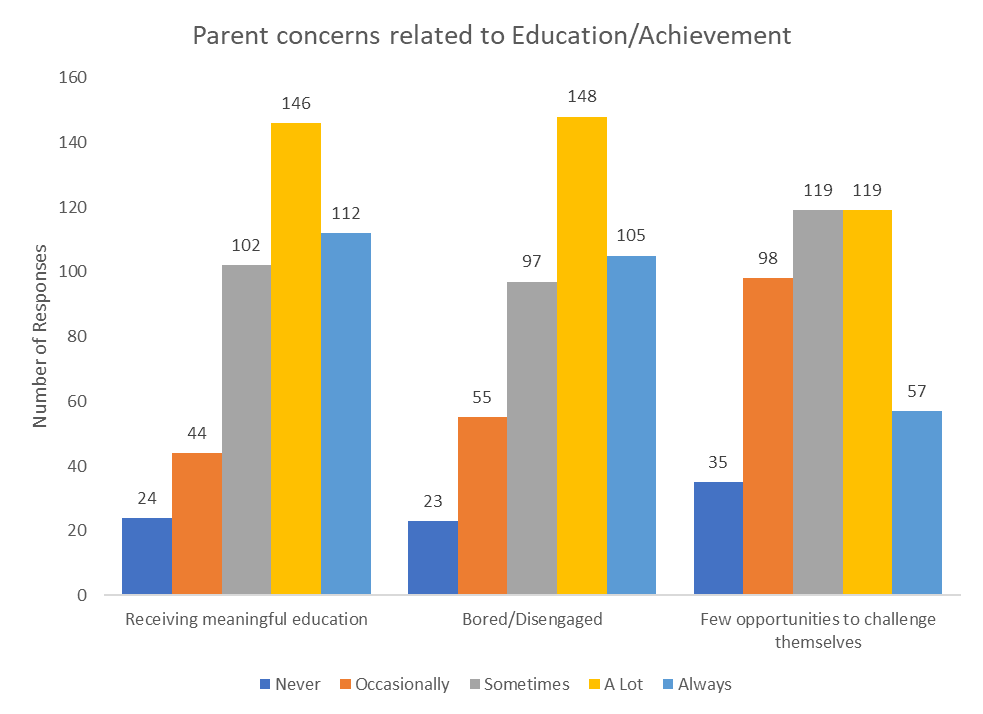
Findings from an online survey I launched in 2022 - with results shared in my recent book - confirmed that parents clearly struggle with concerns about their child's school. For example, 60.2% worried "a lot" or "always" about whether their child would receive a meaningful education, whether they were bored or disengaged (59.1%), and whether they would have opportunities to challenge themselves (40.1%). 


These findings are consistent with previous research. For example, Renati and colleagues noted that 50% of parents surveyed complained about a lack of school support, and Alsop reported that less than 20% of parents viewed their child's teacher as helpful. Rimmlinger also found that one of the greatest identified stressors among parents stemmed from a lack of gifted support available within their child's school.


How can you form a collaborative working relationship with your gifted child's teacher? 


1. Assume that the teacher is your ally. 

Let's face it; teachers don't enter the profession for financial gain! Most embark on their teaching career with enthusiasm and a selfless desire to work with children. Even when they feel burned out, they rise to the occasion and show up each day to teach our kids. Remind yourself of their dedication and positive intentions as you advocate for your gifted or twice-exceptional child's needs. Present yourself as an ally in their efforts; let them know that you appreciate their commitment and hard work understand the limitations consistent with education within a large classroom. When your child's teacher misses the mark, remind yourself that it is not intentional, but perhaps, due to the stressful demands of the classroom or limited training in gifted education and giftedness.


2. Avoid using the "boredom" term.

Teachers want their students to feel engaged. In reality, though, meeting the demands of students with diverse cognitive abilities is a monumental challenge. As long as schools adhere to a policy of "differentiated instruction" and a refusal to consider ability grouping, teachers face impossible choices each day. Do they address the unique needs of struggling students, frustrated gifted students, or the majority of neurotypical students within the classroom? As parents, we know that our gifted children often feel bored, since most teachers cannot easily pivot from their lesson plan to address the faster pace and depth of learning these students crave. But no teacher wants to hear that a student is bored. Instead, share specific complaints, such as how much your child's mind wanders, that they become distracted during specific topics or assignments, or that they rush through homework with little effort.


3. Share what works at home.

Let your child's teacher know what strategies work best at home. This provides guidance for what also might help within the classroom. Does redirection work? Do creative strategies (e.g., drawing what they feel) provide a beneficial outlet? Does your child need a quick energy break when frustrated? Sometimes, children "hold it together" and display ideal behavior in school, but "meltdown" within the safety of home. Their distress at school may be less apparent; nevertheless, they may show signs of disengagement, such as constant doodling, heads on their desks, or staring out the window. Share the signs you notice at home that precede a full-blown behavioral eruption and the intervention you find works best. 


4. Address behavioral and emotional concerns

If your child is displaying disruptive behaviors within the classroom, more intervention is needed. Behavioral problems and inattention are signs that your child is disengaged - and these behaviors take a toll on their teacher as well. Let the teacher know that you understand how difficult and frustrating this is for them and engage with them as an ally. If your child struggles with anxiety or perfectionism or twice-exceptional concerns, such as ADHD or a learning disability, help the teacher devise strategies for offering support. Sometimes, a guidance counselor or school psychologist can be enlisted to develop a plan and monitor progress, and an  IEP (Individualized Education Plan) may be necessary to document the need for additional support. On another note, even if your child is not disruptive, you can mention that behavioral problems might arise if they feel disengaged. This realistic concern might motivate your child's teacher to offer more engaging and challenging assignments.


5. Offer cost-effective solutions

It's not your job to find budgetary solutions. I know, I know. Many parents of gifted children are weary and resentful about the amount of time spent advocating and figuring out solutions that ideally should come from school administrators. In the gifted parenting survey mentioned earlier, 41% of parents claimed that they felt resentment "a lot" or "always" about the necessity of advocating within the schools. Nevertheless, if you can suggest a cost-effective option, your child's needs may be met more readily. For example, subject or grade acceleration options cost nothing. Clustering highly able students together within the classroom when group projects are required is an easy choice. Let the teacher know that you understand the limits of what can be accomplished in a given day and that you are there to suggest as many easy and inexpensive options as possible.


Of course, even with the best of intentions, sometimes communications break down. If you reach an impasse, it may be time to speak with the gifted supervisor, the director of special education, a guidance counselor, the principal, or administrators and school board members. But working with your child's teacher first is ideal - and less time intensive for you. And don't forget to enlist support from family, friends, and others who advocate for the gifted as you venture forth in your advocacy efforts.


Here are a few related articles:

Gifted education: Why is it so controversial?

Three essential tips for teachers of gifted children

25 signs your gifted child is misunderstood at school

Six tips for communicating with your gifted child's teacher


Wednesday, December 21, 2022

Great gifted education articles from 2022


Here are a few of my gifted education faves for 2022 
(in no particular order). These Top 10 articles challenge pre-existing concepts and include views of twice-exceptionalities, the excellence gap, personality types, and the lasting effects of an inadequate education.


How to narrow the excellence gap in early elementary school

"the excellence gap appears long before high school. It looks much the same as far back as fourth grade..."


Schools are killing curiosity: Why we need to stop telling children to shut up and learn

"Promoting curiosity is a foundation for early learning that we should be emphasizing more when we look at academic achievement.”


Smart kids, personality types, and how they adapt - or not - to school

"...within the student population, there were many gifted children whose personalities allowed them to cooperate in school even when it contributed to their own underachievement..."


Gifted students need a "continuum of services" now more than ever

"Systems need to be in place to support teachers facing such a range of achievement levels by providing a continuum of services... This requires flexibility in services, placements, and programming to allow for continual entrance, exit, and re-entry points."


Gifted, on the spectrum, or both?

"Both giftedness and autism fall on a spectrum, so while there may be individuals who clearly fit into one box or another, some behaviors might be more ambiguous and require additional information, context, or professional opinions."


When the "gifted" kids aren't alright

"[Studies] confirm the detrimental effect of a gifted mind left unchallenged, proving that 'busy work' does more than simply leave the child bored... Gifted children will regularly underperform academically against peers later in life, despite a heightened skill set."


Autism treatment shifts away from "fixing" the condition

“We’ve moved away from thinking of autism as a condition that needs to be eliminated or fixed to thinking about autism as part of the neurodiversity that exists across humankind.”


How can the United States better support gifted education?

"...some of the most important steps we can take as a country would be to ensure that all qualified students have access to gifted programs... to provide appropriate training for teachers who work with gifted students, and to allow gifted students to learn at their own pace."


Why ADHD in women is routinely dismissed, misdiagnosed, and treated inadequately

"ADHD in women does not comply with stereotypes. Its distinct symptom presentation is skewed toward inattentiveness – a feature that explains, in part, why ADHD in women is still largely misunderstood, overlooked, and inadequately studied."


A top researcher says it's time to rethink our entire approach to preschool

"...we've simply asked too much of pre-K, based on early results... We might actually get better results, she says, from simply letting little children play."


Do you want more thought-provoking articles related to giftedness, twice-exceptionality, and gifted education? Follow me on Facebook, Twitter (at least for now...), and Instagram, where I routinely post interesting articles I come across and then share them with you.


Wishing all of you a healthy and happy New Year!

Monday, December 5, 2022

Another call to action: Join the mission to clarify giftedness for the misinformed


I have been writing this blog for almost ten years now. I have seen increased awareness related to neurodiversity and heightened sensitivities and the ubiquity of asynchronous development. Many school districts now consider acceleration as a viable option. Homeschooling parents no longer feel embarrassed or defensive about their decisions. And yet... there is still much work to be done. Despite an increase in awareness related to giftedness and twice-exceptional concerns, misinformation abounds.


And I feel weary when I read yet another misinformed assumption about gifted education. 


This particular commentary, written by a parent/educator who complained about an upcoming gifted screening at her daughter's elementary school, cited inaccuracies about IQ testing, ranted about the use of the "G-word," and wielded a distorted and simplistic understanding of the "growth mindset" concept to justify her comments. She expressed concerns that gifted identification could harm a child's self-esteem or lead to a "fixed mindset" about their learning potential. (Note: I am not citing a link in an effort to protect this individual's confidentiality.)


Of course, the school in question might have handled this differently and phrased the upcoming testing as an attempt to discover different learning styles or needs. Perhaps they could have refrained from posting the information at school, and instead sent a private message to parents describing the purpose of the tests and offering guidelines about explaining giftedness to their children. Students are used to testing at school; yet another screening test likely would not be noticed. But a description for parents might have alleviated their concerns and clarified useful information about giftedness for the skeptics as well as anxious parents wondering about whether their child might be gifted.


Granted, I realize I am preaching to the choir here. Most of you reading this are already quite knowledgeable about giftedness, and certainly understand the complexities associated with labeling and gifted identification. When you live every day with a gifted child, navigate their intensity and sensitivity, despair when their school overlooks their needs, and hold back tears when they are rejected by peers - you understand the highs and lows of giftedness. You already know that problems arise when schools ignore the needs of gifted children and refuse to provide a challenging education. And you know that when children are not offered a clear, matter-of-fact framework for understanding giftedness, they will likely form their own conclusions, and possibly internalize the unrealistic expectations and stigma and shaming they observe directed toward people like them. As I commented previously: 


"We would never accept this normalization of stigma and disparagement toward people based on race, culture, gender, sexual orientation, or learning struggles. Yet, gifted children are routinely shamed for their inherent abilities. They did not "choose" to possess a highly active mind, heightened intensities, or a drive for learning that may surpass the academic needs of their peers. As parents, educators, counselors, and legislators, we need to stop the misconceptions, false assumptions, and marginalization of gifted education - all of which can contribute to a false sense of self, confusion, and shame among the gifted."


So, I am calling on you, dear readers, to rise up and commit to actively challenging any misconceptions about giftedness - whenever you hear them. Any false beliefs, alarmist criticism, and tired stereotypes. Any attempts to conflate gifted education with elitism or favoritism or harm to others. Any assumptions that giftedness does not exist, or that kids can stop being gifted, or that eliminating gifted programs will solve the problems that besiege so many schools. I have commented widely that you are enlisted as an ambassador for giftedness, and must educate others wherever you go. On the sidelines at soccer games. At school board meetings. At holiday meals with misinformed family members. 


Please join me on this mission - to enlighten others with clarity about the essential differences that giftedness brings out. All it takes is your keen attention to misconceptions when they are spoken, and the courage to speak up and share your wisdom with others.


** For more insights about giftedness, please see my new book, The Gifted Parenting Journey. Available through the publisher and on the usual bookseller sites, this book addresses a previously neglected topic in the literature: the needs and emotional life of parents of gifted children.**

Tuesday, February 23, 2021

How to help your gifted child build resilience: Reframing failure


When my oldest son was in second grade, he was assigned a dinosaur diorama project. I found an old shoebox and left him to complete the assignment on his own. He did a reasonable job, although nothing stellar. 


Several weeks later, I attended a parent-teacher conference and noticed the projects on display. Most were exceptional - meticulous, detailed, and beautifully designed. In other words - not the work of seven or eight-year-olds. When I asked if other parents, perhaps, had played a role, the teacher just sighed. Yes, most of the parents completed the projects along with their kids... or even for them. She had come to expect this.


I was stunned - partly by my own naivete, but mostly by the sheer number of parents who had been so involved in this relatively unimportant project. Why was it so critical that their children excel - even at such a minor task? 


When parents sometimes get too involved


Parents intervene to help their children, even if it means "breaking the rules." The pressures parents feel are all too common. When it is 9:00 PM and their frustrated, whining child begs for their help. When they worry that they will be judged by teachers or friends or family for not helping enough. When their own perfectionistic tendencies compel them to take over. When their tearful, anxious child is distraught and overwhelmed.


There may be unique and justifiable reasons for any of the above interventions. But what happens when they occur regularly?


Much has been written about the importance of building resilience, allowing children to fail, and knowing when to stand back and let them struggle. We know that children build confidence and competence by learning from experience and weathering disappointment. Yet sometimes, worried parents can get a bit too overinvolved. Jessica Lahey, for example, has described middle school parents who insisted their children could do no wrong, who rescued them from any sign of struggle, or viewed a B- grade as a blemish on their child's record. The college admissions cheating scandal clearly epitomizes parental involvement gone awry. And we all know of families where children have yet to complete a chore, or where parents quickly withdraw them from any class that is too demanding.


Why we get too involved


No one likes to fail. It feels lousy. And it is especially painful to watch our children fail or struggle. Too many of us have been traumatized or shamed by failures of our own, and hope to shield our children from hurt. Gifted children, in particular, may be highly reactive, sensitive to perceived rejection, and reluctant to take academic risks. While headlines about “helicopter” parenting make good press, most parents are rarely so extreme. Most just want to protect their children from hardship. Yet, when we intervene too readily, we interfere with our child's resilience-building; resolving an immediate problem by taking over what your child could reasonably handle only delays their independence, confidence, and the capacity to endure stressful situations. 


Of course, perfection is a lofty goal in parenting, and none of us always gets it right. While I believe my minimalist role in the dinosaur project was appropriate, I plead guilty to imperfect parenting - sometimes overdoing it, sometimes not doing enough, and not always making the best decisions. And there are times when parents absolutely need to be involved - situations where a child is truly struggling, or is depressed or anxious and needs more hands-on support, or needs a push to study effectively, such as when a particular test (e.g., the SAT's) will determine long-range opportunities. This level of attuned encouragement is different from pressuring your child too much (see this link). However, there are some general goals we can strive toward as we encourage confidence and resilience in our gifted children.


Managing the sting of failure


The ideas listed below (Part One of a series on resilience), as a first step toward managing the sting of failure, address how failure experiences are perceived. In addition to resilience-building skills (which will be addressed in Part Two), it is essential to frame failure with an open mind and accepting attitude. A failure experience is less emotionally painful when viewed as part of a learning process, rather than as a sign of generalized incompetence or an indication that nothing will improve. If it can be understood as a normal part of growth and development and an opportunity for learning and self-awareness, its negative impact is diminished.


1. Respect their feelings


First, acknowledge your child's pain. Failure experiences sting; even when the situation seems minor to us, it can be a big deal for your child. Let your child know you understand and appreciate the suffering associated with feelings of anguish or embarrassment or disappointment. This does not mean dwelling on the negative, or enabling setbacks, or "coddling." As Brene Brown has noted, the recent cultural and media focus on grit and the "redemptive power" of failure overlook "the large swaths of darkness and struggle preceding it." Let your child know that you understand - and will be available as they move through and past it.


2. Reframe failure


Help your child "reframe" the concept of failure. If we view failure as a normal part of life and an opportunity for learning, its negative impact is diminished. Self-awareness, borne out of success, failure, and life in general, results in micro-adjustments to how we respond to stress, push ourselves, size up situations, and recalibrate when things don't go as planned. These are essential, necessary life skills. We also can help our children learn to distinguish between variations on the theme of failure. There are tiny failures (like forgetting their lunchbox), medium-sized failures (not finishing an essay on time), or big ones (like failing an entire course). Some sting more than others, but all are opportunities for growth and development. 


As parents, we also serve as role models. Our children observe (more than we realize, sometimes) how we handle stressful situations. We have the opportunity to demonstrate that we can cope with failure and that it is a normal part of life. It happens all the time - when we burn the waffles, forget our friend's birthday, or even lose our job. We can role model how to weather these events without shame, learn from them, and makes changes so that we behave differently in the future. Our children see that we are not crushed by failure, even if we feel frustrated or disappointed. In other words, they witness our resilience.


3. Put it in perspective


Your child's independence, confidence, and self-sufficiency are the ultimate goals. Keeping this perspective will guide you when choices get tough. Encouraging your child's independence is not a "hands-off" policy; in fact, it involves encouraging your child to face challenging situations, creating expectations for success, and refusing to "rescue" or shield them from developmentally-appropriate responsibilities. You can encourage your child to take academic risks, and appreciate how some achievements are more meaningful when they initially seemed out of reach. And you can promote the importance of ethics, integrity, cooperation with peers, and taking responsibility for their role in the classroom. Let your child know that actions speak more about character than accomplishments, and how one behaves is more important than being the best.


A final note:


Rather than rescuing our children from the latest setback, we serve them well when we encourage and support their independent efforts to tackle their problems. While this often forces us to hold our breath and sit with our own fears as we watch them struggle, it is just one of the many challenges we face as parents. As long as they are on the path toward growth and development, learning from experience is one of the best opportunities we can give them.


Part two will address specific resilience-building strategies.