Showing posts with label parent-child relationship. Show all posts

Sunday, September 10, 2023

Why is attunement so essential when parenting a gifted or twice-exceptional child?

We all make mistakes.

Most of the time, our parenting mistakes are unintentional. We love our kids and strive to do our best. But sometimes, we misinterpret and misunderstand their needs. We might rely on advice from friends, neighbors, and social media, or enlist child-raising strategies learned from our families, despite evidence that this doesn't work for our gifted or twice-exceptional child.

Even the most well-intentioned parenting practices fall flat when we are not attuned to our child.

The parent-child bond rests on a secure attachment. Children need to feel they are understood, as well as loved, and that you are attuned to their needs. Parental attunement requires an understanding of our child's unique temperament, developmental level, sensitivities, and response to complex situations. It involves empathy for what our child is feeling - even when their reactions, behaviors, or emotional outbursts seem excessive. It also asks that we reflect upon our personal beliefs, attitudes, worries, and expectations so that our needs (conscious or unconscious) do not contribute to misattunement. Not an easy task. Here is one example:

Kayla's daughter Anna (whose names are changed to protect confidentiality) landed the lead role in the school play. But you would never know that from her mood. She tearfully bemoaned her close friend Nicole's anger toward her. Nicole auditioned as well, but was awarded a minor part. Nicole had stormed off and wouldn't speak with Anna, who now worried that the friendship was over.

Kayla found herself feeling frustrated. Her emotions translated into the following thoughts. Why is everything so darn complicated? Why does she have to be so sensitive? She should be excited. I would have been ecstatic if I landed that role when I was her age. Why can't she just feel happy for a change? She deserved that lead role and boy am I disgusted that her friend had to ruin it for her. Maybe it's time that she stop being friends with that girl.

Kayla's emotions and thoughts were understandable. However, she took a deep breath and considered instead what was going on right in front of her and how to best respond to her child. 
"Honey, I know this must be so hard for you - it is so exciting that you got the lead role, but at the same time, upsetting that Nicole reacted like she did. I know your friendship with her is really important. Let's give her some time to lick her wounds. She will probably come around and be your friend again. I hope that with some time, you can also feel excited and proud about this great opportunity with the play."

Self-awareness is key. Attunement requires an overriding understanding of what your child needs at any given moment. Like Kayla, sometimes that means swallowing your own anger or disappointment and helping your child navigate difficult emotions. Kayla acknowledged Anna's distress and mixed feelings - and did not disparage her daughter's friend. She conveyed that it is okay to have conflicting emotions, and trusted that over time, Anna would have the strength to move beyond this impasse with her friend.

(**For information about an upcoming workshop geared toward attaining greater self-awareness as a parent, please see below or click on this link.**)


What is parental attunement?

Decades ago, psychoanalyst Donald Winnicott described the importance of the parent's healthy “mirroring” of their infant's reactions, where their response accurately reflected back what the child was experiencing. Infants feel safe when they gaze at their parent and see their own emotional state reflected back to them (think cooing when they smile, or a frowny face when they are upset). Most infants can overlook the parent’s occasional distracted mood if they feel understood and "mirrored" most of the time. However, disruptions can arise when a parent is chronically distracted, depressed, anxious, or angry, and unable to respond in an attuned manner. 

Attunement does not mean you must always agree with your child, offer them a constant stream of candy and toys, or rescue them from challenging situations. Children recognize that you are not going to cave in or necessarily agree with them, and reluctantly admit that certain expectations and demands are developmentally appropriate. As children mature, they more easily weather occasional misattunement. They recognize that you get distracted and stressed – and sometimes even realize that you have a life of your own separate from theirs! However, the sense that you still “get them” and understand their feelings is essential. Gifted children, in particular, are often highly sensitive, appreciate the complexity inherent in most situations, and hold high standards about fairness and justice. They crave your understanding and will be distraught if their emotions are shamed, criticized, or disparaged. 


What about "parenting style?" 

Studies of parenting styles (a concept initially proposed by Diana Baumrind) support using an authoritative parenting style, especially with gifted children. In contrast to an authoritarian style (e.g., my way or the highway) or permissive parenting (e.g., anything goes), an authoritative style combines warmth and communication along with limit-setting and structure. 

It makes sense that gifted children would resist an authoritarian style. Eager to debate and parse through every demand, yet longing for your loving warmth and understanding, gifted children balk at authoritarian directives. It just doesn’t make sense to them. In one study, an authoritative parental style was positively correlated with both gifted and nongifted adolescents' mental health, but gifted adolescents, in particular, exhibited worse mental health when they were the recipients of an authoritarian parenting style. 

Academic achievement also has been linked to parenting style. One study reported a correlation between authoritative parenting and a gifted child’s level of achievement and good grades, and that both authoritarian and permissive parenting styles were negatively associated with grades. In another study, early college entrants from families with an authoritative parenting style had higher grades.

Although not specifically a study of parenting style, Paula Olszewski-Kubilius and colleagues assessed family patterns and social development among 1,500 gifted students and their parents. They summarized their findings as “consistent with previous research in that affectionate, supportive, and respectful family environments appear to be important to the development of interpersonal skills and competency and peer relationships for gifted individuals” (p. 199).


What we must consider going forward

Children crave your attuned understanding. However, most teens and older children recognize that you can be distracted, angry, or forgetful, and that your reactions sometimes miss the mark. Cultivating a caring, consistently respectful relationship can offset those times when misattunements occur. As I commented in my book, The Gifted Parenting Journey, 

"What buffers children from these momentary lapses in attuned attention is the stability inherent in a mutually respectful, caring, flexible, and well-intentioned family environment. Frequent, enthusiastic, and affectionate expressions of love for your child – just for being who they are – are essential. Letting them know you love them, enjoy time with them, appreciate their unique, adorable, and amazing traits, and relish watching them grow and flourish, will create a sense of security they will carry into adulthood" (p. 148).

The importance of parental attunement has received more widespread attention and has even hit mainstream media. In a recent Time Magazine article, journalist Jenny Anderson highlighted the importance of attuned parenting in healthy parent-child relationships: "Being attuned to kids' emotional states is a crucial way parents support healthy development... A child's sense of self grows stronger and matures by being known, attended to, and by feeling they matter, first and foremost, to their parents or caregivers."

Basic tools for parental attunement include paying attention to a child’s verbal and non-verbal cues, commiserating (although not lingering too long) with their disappointments, and sharing in their joy. When your child shows excitement, join in. When they are sad, let them know you understand their sadness, but assume they will rebound (and are there to help them). And ultimately, take care of your own emotions (through healthy adult relationships and emotional outlets) so they have less impact on your child. Psychiatrist and author Dan Siegel has emphasized the importance of understanding your own childhood influences so you can parent at your best:

"If you had a difficult childhood but have come to make sense of those experiences, you are not bound to recreate the same negative interactions with your own children. Without such self-understanding, however, science has shown that history will likely repeat itself, as negative patterns of family interactions are passed down through the generations" (p. 15). 

 Attunement and empathy demand an awareness of our child's unique needs, as well as our own wishes, expectations, fears, longings, and how our own childhood baggage affects us. It does not require perfection, however. Parenting is an education for all of us. Life interferes and we all screw up at times. But we can make a commitment to become more aware of our feelings and motivations - and then make the best decision possible based on our child's needs in the moment.  We cannot prevent some of life’s mishaps and tragedies; however, we can provide a safety net through our loving, consistent, flexible, and attuned presence.


**For more insight into your gifted parenting journey as you navigate an attuned relationship with your gifted or twice-exceptional child, please join us for a "Beyond the Basics" Gifted Parenting Journey Workshop Series. The series is designed to provide an experience where parents can take that next step beyond merely gathering factual information – a place where group participants are guided to learn more about their parenting attitudes, emotions, and expectations, and where they can share their own wisdom with others as well.

For more information about the workshop series, and to become part of a community of like-minded families through the Gifted Parenting Journey Community, please click here.**


Thursday, July 27, 2023

The gifted child's rocky path to adulthood... and how you can help


The transition to adulthood is complicated for most of us. But gifted or twice-exceptional children bring additional challenges to the table that create some unexpected difficulties. 

Wishful thinking leads us to assume that once our gifted children mature, their lives will follow a smoother path. And for some lucky families, this certainly happens. After all, gifted children have, well... gifts in terms of exceptional cognitive abilities, intensity, focus, drive (for what interests them), and excellent critical thinking skills. They possess the foundation for a successful life ahead.

But for most parents of gifted children, the worries don't stop when their child turns 18. Our grown kids drag their childhood selves into their adult years - replete with multiple complex interests, social quandaries, existential questioning, and emotional sensitivities. All of this results in a bumpy launch into adulthood for many gifted young adults. And as parents, we watch from the sidelines, questioning what to do and when to intervene.

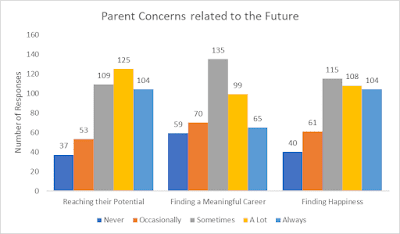
In an online survey of 428 parents of gifted children conducted in 2022 (described further in The Gifted Parenting Journey), 54% of parents claimed that they felt worried "a lot" or "always" about whether their child would reach their potential (with only 8% indicating that they "never" worried), 38% worried "a lot" or "always" that their child would not find a meaningful career (with 13% claiming that they "never" worried), and 50% worried "a lot" or "always" that their child would not find happiness as an adult (with 9% indicating that they "never" worried about this).  Clearly, most parents' worries about their gifted children extend well into the future. 


What are some of the challenges that complicate a gifted or twice-exceptional child's path to adulthood?


Heightened sensitivities and excitabilities. Increased sensitivity and intensity can create difficulty when transitioning and adapting to new circumstances. Whether adjusting to a roommate, accommodating an ever-changing daily schedule, or navigating new and complex social pressures, gifted young adults may struggle. 

The joys and stress of newfound freedom. Confronted with their longed-for independence, gifted young adults may be surprised that they might feel anxious. They may crave their independence, but now feel uncertain about making decisions on their own without relying on you to provide structure or support. 

Social pressures. Gifted kids often struggle with asynchronous development when they are young, but may continue to lag behind their peers in terms of social maturity. This becomes a challenge when confronted with very adult decisions and multiple social expectations. They must learn to listen to their inner voice when faced with pressure related to drugs, alcohol, sexual encounters, or demands from roommates or friends. Introverted gifted young adults may have difficulty finding alone time to decompress when living in crowded conditions. Many also harbor insecurities stemming from a childhood where they did not fit in with peers. 

Increased academic or career demands. Gifted kids frequently have an easy time with academic demands in high school. Most classes are easy, or at the very least, require only minimal effort. The stakes increase once they leave for college. Coursework might be challenging for the first time, which may be a shock for some. With fewer safety nets, increased demands, and steeper competition, the potential for failure looms large. And challenging career responsibilities leave little margin for error. 

Executive functioning difficulties. Many gifted children coast through school with little need to develop the planning, time management, or organizational skills so vital to success. Now they must juggle a demanding schedule that differs from day to day without parents nearby to nudge them to complete their assignments or remember a meeting time. College and career provide a rude awakening to the importance of time management, remembering deadlines, and planning ahead.

Career choices take on added urgency. No longer free to dabble in what interests them, gifted young adults must decide on a career path that will be fulfilling, meaningful, and will pay the bills. Multipotentiality (possessing a range of abilities and interests) complicates their daily lives, as well as career planning. They struggle with decisions about career choices and grieve the loss associated with relinquishing endless possibilities and the luxury of engaging in multiple passions and interests.  

Heightened existential and identity concerns. In addition to the stress of career planning, gifted young adults grapple with their sense of identity. This is similar to the existential awakenings that arose during middle school but creates an even greater sense of urgency. As noted in "What kind of gifted person will you become?" gifted folks have enormous potential, but also grapple with finding a path that is meaningful to them.

         Who am I if I compromise and make choices that contradict my values? 

Am I really smart if I fail a class or don't get hired for what seems like an ideal job?  
What happens if I choose a career path that disappoints others or leads to my own disappointment? 

What about my sexual or gender identity, my political and spiritual values, and my uncertainty about how much to assert myself?  

How do I use my abilities for the better good and find a path that is fulfilling?
How do I navigate all of the complexities of the world around me, fight climate change and injustice, and still earn a salary that allows me to be independent?

 A tall order for all young adults. But all-too-common tendencies toward overthinking, existential angst, and perfectionism create even greater challenges for the gifted.


How can parents support their adult children as they transition to adulthood? Here is a short list of simple strategies:


1. Let them know you are always there to listen. 

2. Offer advice only when they are open to it. (This is a tough one for loving, concerned parents!) Your sage wisdom will be abruptly dismissed if your timing is off or if they feel pressured or diminished.

3. Remind them that you have faith in them and trust that they will arrive at the best possible solution available.

4. Reassure them that you do not expect perfection - you just want them to thrive, put in effort when required, and find the path that suits their needs.

5. Point out that it is normal to question goals and expectations - no big decision comes easily, and their self-reflection is a sign of maturity and conscientiousness.

6. Let them know that you expect them to struggle at times - this comes with adulthood and something you have been through yourself.

7. Just like when they were young, learn to pick your battles. But battle less often. Determine when intervening is essential to their well-being (e.g., they are at risk of losing their health insurance because they forget to submit payments) or merely based on your personal preferences (e.g., they got yet another tattoo). 

7. If they are struggling excessively or you learn they have significant mental health or substance abuse problems, you may need to intervene and insist that they seek help. Of course, you ultimately have no control over their decisions (another tough lesson for loving, concerned parents), but at least you would have tried - and sometimes when they are truly struggling, they just might let you help.


In essence, your child's launch into adulthood is not that much different from any other transition - replete with emotional reactivity, struggles, and ultimately, success. They bring their strengths, quirks, and unique sense of self to this next phase. Their task requires a focus on finding a meaningful road forward, developing the resilience to weather setbacks, and learning to embrace their complexity. Your job, as a parent, is to weather your own reactions to this transition and find your path toward developing a more mature relationship with them. Your patient, attuned, loving connection, tempered by a respect for their autonomy, will support them as they stumble, question their path ahead, and ultimately thrive. 


Thursday, October 6, 2022

What are the "4 E's" of Gifted Parenting?


Parents of gifted kids face an array of challenging emotions, often juggling multiple feelings at once. Some of the most perplexing emotions and reactions can be summarized as "the 4 E's." Not to be confused with 2e, a term used to describe twice-exceptionality (when gifted children also struggle with a condition such as ADHD or anxiety), the concept of  "the 4 E's of Gifted Parenting" is shorthand for some of the most common pressures and emotions parents of the gifted face: exhilaration, envy,  embarrassment, and (high) expectations. Many of the worries and confusion parents often face stem from these four emotions and reactions. The sooner we understand how our emotions are triggered, and can compassionately accept and learn from how we feel, the more easily we can manage their impact on our children.


These emotions are described in depth in my new book, The Gifted Parenting Journey: A Guide to Self-discovery and Support for Families of Gifted Children. And while I plan to elaborate further in future blog posts and articles, a brief description of these complex emotions is listed below. Some findings from the Gifted Parenting Survey, an online survey conducted in early 2022 to access parents' emotions and reactions, are also included.


Exhilaration

Of all the emotions and reactions we experience as parents, exhilaration, excitement, and pride over our gifted child's abilities and accomplishments are the easiest to accept. Who wouldn't be overjoyed and astonished that their child excels, wins awards, or shows tremendous empathy and compassion for those less fortunate? Nevertheless, these feelings can be complicated. Many parents of the gifted are reluctant to share their child's latest accomplishments with even their closest friends, given concerns that they might appear to be bragging or that acknowledging their child's giftedness could create conflict. Parents of neurotypical children often cannot fully grasp that our child's accomplishments are not the product of prepping and coaching, but a natural progression based on their abilities. Our spontaneous expression of excitement may be perceived negatively. As a result, we might hold back details - or possibly share nothing at all.

In the survey of 428 parents of gifted children launched online earlier this year (and summarized in my book), a large percentage of parents (54.2%) indicated that they felt grateful "a lot" or "always" for their child's ability to excel and enjoy school and 30.3% were grateful "a lot" or "always" that their child possessed additional qualities, such as creativity, empathy, curiosity, and sensitivity. Certainly, these families have a lot to share about their child's strengths! Yet, two-thirds of these parents (65%) indicated that they felt misunderstood by other adults "a lot" or "always." Interestingly, a much smaller number reported that they have been accused of bragging (30%). It is possible that many parents of the gifted avoid situations that might result in accusations of boasting or bragging, and prefer to keep their thoughts and feelings to themselves.


Envy

Envy is not pretty. It is not something we are proud of. Yet, almost everyone experiences envy at some point. It arises when we encounter folks with better looks, or abundant wealth, or whose children never seem to get in trouble! Parents of gifted children face some unique experiences with envy, particularly when we compare ourselves or our children to others. When our child shows signs of asynchronous development, behaves immaturely, and cannot fit in with peers, we may wish they were more, well... normal. When another student wins that award we feel our child deserved, we might feel resentment - even though we know that the other child was also deserving. When we encounter families that can provide enrichment and after-school activities we cannot afford, we might envy their wealth. 

Contrary to what we might expect, a substantial percentage of parents in the Gifted Parenting Survey did not report feelings of envy related to their child's level of functioning. In fact, 38.3% reported "never" feeling envy toward other children with better social skills, and 48.2% claimed that they "never" feel envy toward children who receive more recognition. It is possible that parents in this sample are exceptionally generous in how they react to others' successes or are able to distinguish their child's gifts/challenges/struggles from those of other children. On the other hand, envy is a troubling emotion; it is possible that this survey's questions did not tap into underlying resentments that are not easily acknowledged - even within the confines of a confidential survey.


Embarrassment

All kids make goofy choices, disappoint us, pronounce their uncensored observations (at quite inopportune times!), and disappoint us with their oppositional, disrespectful, or clueless behaviors. It's all a part of growing up and learning appropriate behavior. We may feel particularly vulnerable to embarrassment, though, when our gifted kids' advanced intellect and asynchronous development confuse other adults who cannot grasp how such a bright child can behave so immaturely. It is difficult to take a neutral stance, calmly explain the discrepancy between their intellect and their behaviors to bystanders, and take that deep breath while reminding ourselves that we are not responsible for their actions. 

Despite commonly voiced concerns about the embarrassment parents of gifted children feel when their child disappoints, few of the parents in the Gifted Parenting Survey identified frequent feelings of embarrassment. In fact, 34.3% reported that they "never" felt embarrassed by their child’s social or emotional immaturity, 41.5% indicated that they "never" felt embarrassed by quirky or non-normative behaviors, and 42.9% reported "never" having concerns about their child’s disrespect toward authority. Perhaps, those parents who responded to the survey are a compassionate and enlightened group and have accepted some of their child's offbeat behaviors. On the other hand, like with feelings of envy, admitting to a troubling emotion like embarrassment may be difficult to acknowledge. It is also possible that only a subset of parents - perhaps those with highly asynchronous children - experience embarrassing incidents.


Expectations

We all have expectations for our children, whether associated with family values, cultural norms, or merely an assumption that they should demonstrate kindness and respect to others. However, parents of the gifted are quite aware of their child's abilities and often feel pressured to personally ensure that their child excels. They question whether to push their child and worry that they might be pressuring their child too much - or conversely, not enough. When our children have so much potential, we may hold high expectations for them and assume personal responsibility for nurturing their talents. And of course, one of the greatest expectations involves what the schools can provide for our gifted child; these are typically realistic expectations that are rarely met, given the limited options available in most schools. 

Worries about how to manage our expectations for our children are common. In the Gifted Parenting Survey, 90% of parents indicated that they feel a daunting level of responsibility to meet their child's academic needs "a lot" or "always" and 53.5% worried "a lot" or "always" about whether their child would reach their potential. And 51.6% felt uncertain "a lot" or "always" about how much to push their child. Clearly, the profound sense of responsibility for nurturing so much potential weighs heavily on the minds of many of these parents.


The Takeaway

Every parent is unique and the intensity of our response to the "4 E's" will vary. What is most important is your diligent pursuit of self-awareness and attention to how your personal feelings and reactions might influence both parenting decisions and your relationship with your child. Use the "4E" concept as a check-in when you feel off-balance, pressured, uncertain, or experience regrets over how you approached your child. We are all imperfect as parents, but we owe it to ourselves and our children to recognize when we respond without thinking and when our reactions conflict with our goals and values. 

A more in-depth understanding of these topics is available in The Gifted Parenting Journey. Interactive online workshops related to this topic also will be offered soon! (If you are not already receiving emails with these blog posts, please consider signing up.)  And as I mentioned in previous blog posts, I am immensely grateful to those of you who responded to the Gifted Parenting Survey and shared your experience with all of us!